One Tree, One Song: Why the World Needs a New Kind of Anthem
National anthems are among the most evocative pieces of music ever written. With a single melody, they can ignite pride, delineate borders, and root millions of people to a specific piece of geography. They celebrate distinct heritages and remind us where we come from.
Yet, that distinct identity often carries a quiet, heavy cost.
Throughout history, national anthems have served not only to define us, but also to separate us. Lines drawn on maps turn into political divisions, disputes over land and resources, and the belief that our humanity ends where a border begins. When music is used primarily to define who belongs within an enclave and who stands outside it, it echoes the walls we build rather than the ground we share.
The Vision: Music as a Root System
Our vision begins with a simple truth: before there were flags, treaties, or borders, there was the earth and there was humanity.
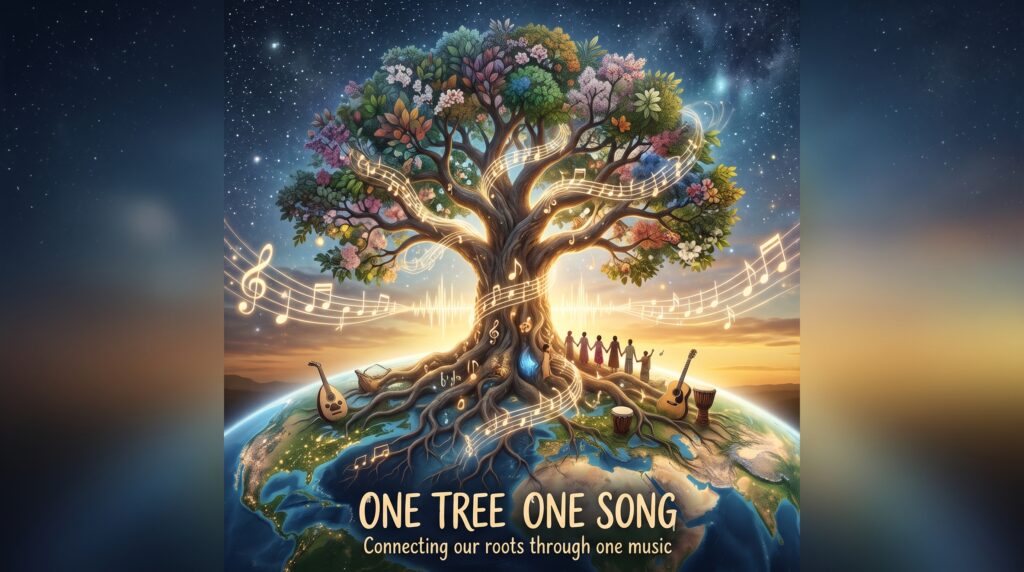
I envisioned a musical foundation that grounds people in their ancestral roots while binding them to the rest of the world. Think of human culture as a vast, ancient tree. We may branch out into countless languages, skin tones, traditions, and worldviews, but we all draw life from the exact same soil.
Our mission is to craft music that reflects this reality—one central melody, one unifying heartbeat, that can branch outward into every region on the planet. By honoring Indigenous roots, traditional instruments, and local idioms, that single theme adapts to every ear without ever losing its original universal core. It is an invitation to celebrate regional identity without surrendering global solidarity.
Roots, Loss, and Redefining Belonging
Growing up as an Indigenous native in the Palestinian Territories, the weight of political division was never an abstract concept; it was daily life. I was surrounded by colliding religions, historical grievances, and conflicts both ancient and ongoing. Witnessing that relentless friction leaves an imprint. At times, the sorrow and anger felt unbearable—until I realized I had a choice: let that pain consume me, or transmute it into a fierce, unconditional love for humanity, for every culture, and for all living things.
That journey of healing ran parallel to another deep absence in my life: growing up without a father. For years, fatherhood was a blank canvas in my heart—an empty space where guidance and protection should have been.
It was only after moving to Canada that my understanding of love and family cracked wide open. Embraced and mentored with warmth, dignity, and kindness by older figures—particularly within the older gay community—I experienced a form of care I had never known. They helped me redefine fatherhood on my own terms: not as an exclusive biological duty, but as a boundless capacity to nurture, protect, and guide without condition or limit.
“Fatherhood” and the Journey Ahead
In 2025, that breakthrough took sonic form in a composition titled “Fatherhood.”
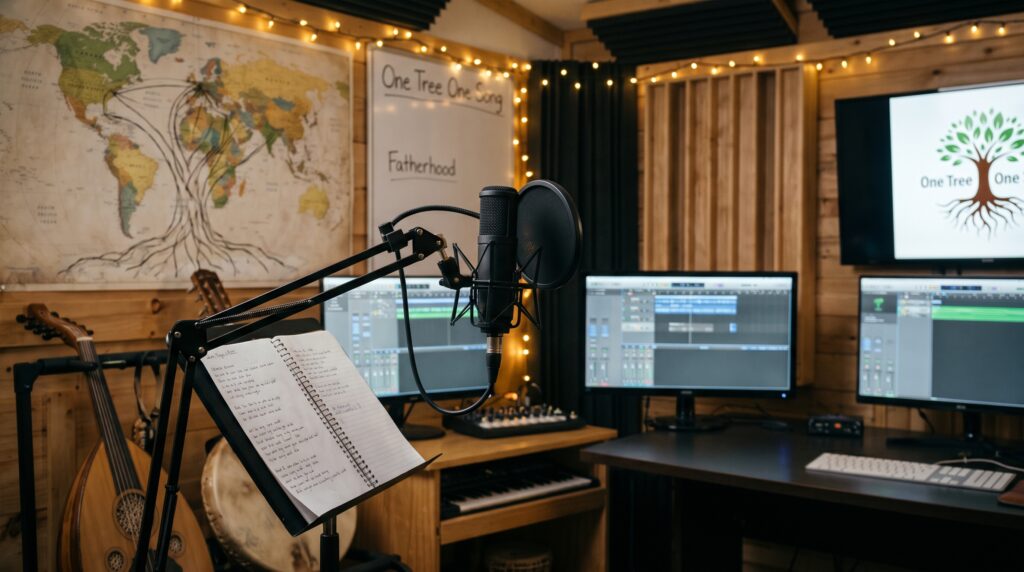
Stepping into music study and collaborating with emerging AI creative tools opened an unexpected door within me. I discovered an innate musical instinct—the ability to internalize, sing, and memorize melodies across diverse cultural traditions. For a song to resonate through my voice, it must first move through my heart; “Fatherhood” was the spark that ignited everything.
What began as an emotional piece is expanding into an international endeavor. The goal is to adapt this single musical theme across every continent—weaving in regional Indigenous languages, local choirs, and traditional acoustic instrumentation native to each land. It is living proof that diverse regional sounds can harmonize around a single shared truth.
You can listen to the first iterations of this journey on YouTube. If this message speaks to you, take a moment to listen, share, and connect. Every voice, every ear, and every small show of support helps bring the branches of this tree a little closer together.
Thank you,
Ed Walwail
Cover credits: Mixed by Ed Walwail with the help of my Google A.I.